FEMALE CRICKET FLOURISHING AT TERENURE (SEPT 2025)
Since 2019, Terenure Cricket Club has worked with determination to re-establish a women’s section. Our goal was simple but vital: to create a pathway for our youth girls so they could continue playing cricket into their teens and beyond. Along the way, we have also welcomed many women who had never played before, as well as those returning to the game many years after last playing in school or college.
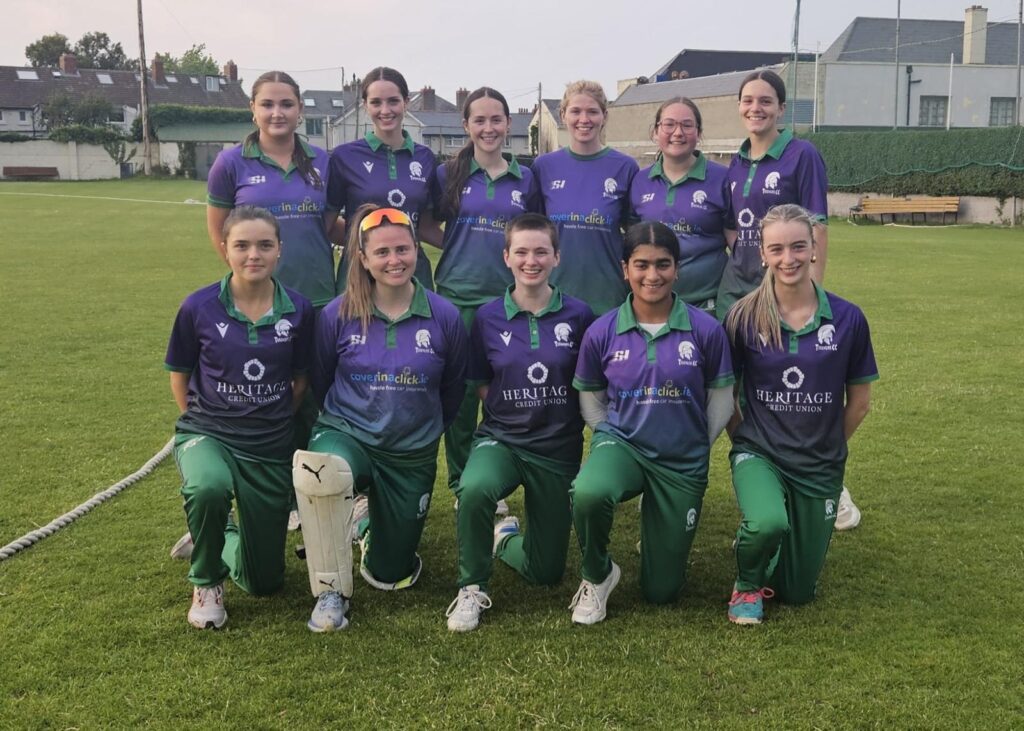
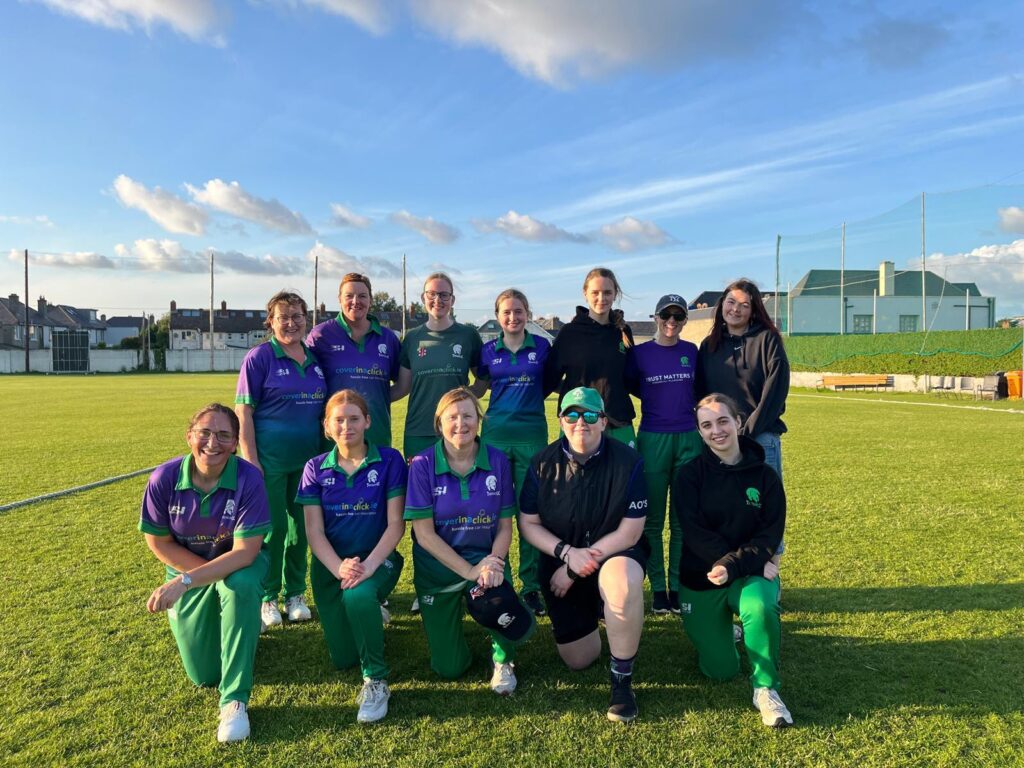
That vision has become a reality. In 2025, we proudly fielded three women’s league teams in Cricket Leinster competitions along with a thriving social side. Our players now range in age from 13 to 60, with several mothers and daughters sharing the pitch together—a true testament to the spirit of inclusion.
A highlight of the season has been competing across Divisions 2, 3, and 4, with a 3rd XI entered for the first time this season. On August 11th, something we may never have thought imaginable five years ago happened, when we fielded both our 2nd and 3rd XIs on the same evening, an achievement that reflects the depth and strength we have built.
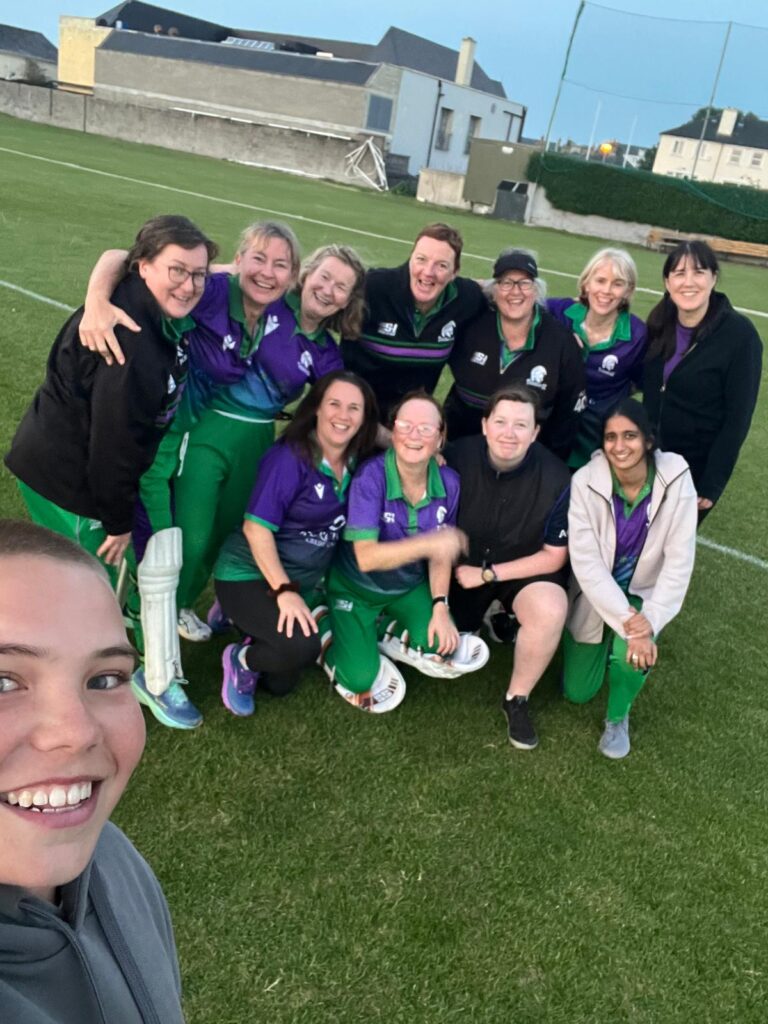
Another milestone this year was welcoming our first overseas women’s player, who not only brought valuable on-field experience to our First XI but also provided coaching support across all levels. Her presence has enriched the squad and lifted performances throughout the club, as well as providing a role model for the many young players coming into the club for the first time to look up to.
The growth and expansion of players coming into the club has seen our CricHIIT programme launched this year with great success. Alongside our social cricket, these sessions have proved a brilliant introduction to the sport for many new members, who came to the club with no experience of playing cricket at all. Of course, growth comes with challenges. Expanding our women’s section has required significant investment in additional training equipment and playing kits for use by new players. We are deeply grateful for the support of The Paul Reynolds Inclusion Fund, whose award has ensured that increasing numbers did not mean stretched resources.
- FAIR PLAY AWARD FOR TOMÁS ROONEY-MURPHY (2026)
- CL DEVELOPMENT MANAGER (NORTH LEINSTER) – JOB ADVERT (OCTOBER 2026)
- COMMUNITY SPORTS FACILITIES FUND 2026 - UPDATED CL WEBINAR INFORMATION (TUESDAY, OCT 20TH, 2026)
- AOIBHINN DALY WINS CL WOMEN’S MOST IMPROVED PLAYER AWARD 2026!
- SECOND XI PREMIER LEAGUE INDIVIDUAL AWARDS CONFIRMED (SEPT 17TH)
- CL DISCIPLINARY PROCESS CASE SUMMARY (17.9.2026)